Let’s be real for a second. If you are a software engineer or a technical founder, you probably hate link building.
To most developers, traditional SEO outreach feels slimy. It feels like we're being asked to send hundreds of copy-pasted, begging emails to random bloggers asking them to link to our "Ultimate Guide to X." We prefer logic. We prefer writing clean code, deploying it to a server, and letting the product speak for itself.
But here is the harsh reality of the internet in 2026: Code doesn't rank itself. You can build the fastest, most beautifully architected Next.js or Laravel application in the world. You can hit a perfect 100/100 on Core Web Vitals. But if no authoritative websites are linking to your domain, Google's algorithm is going to treat your app like a ghost town. Backlinks are the currency of trust on the web.
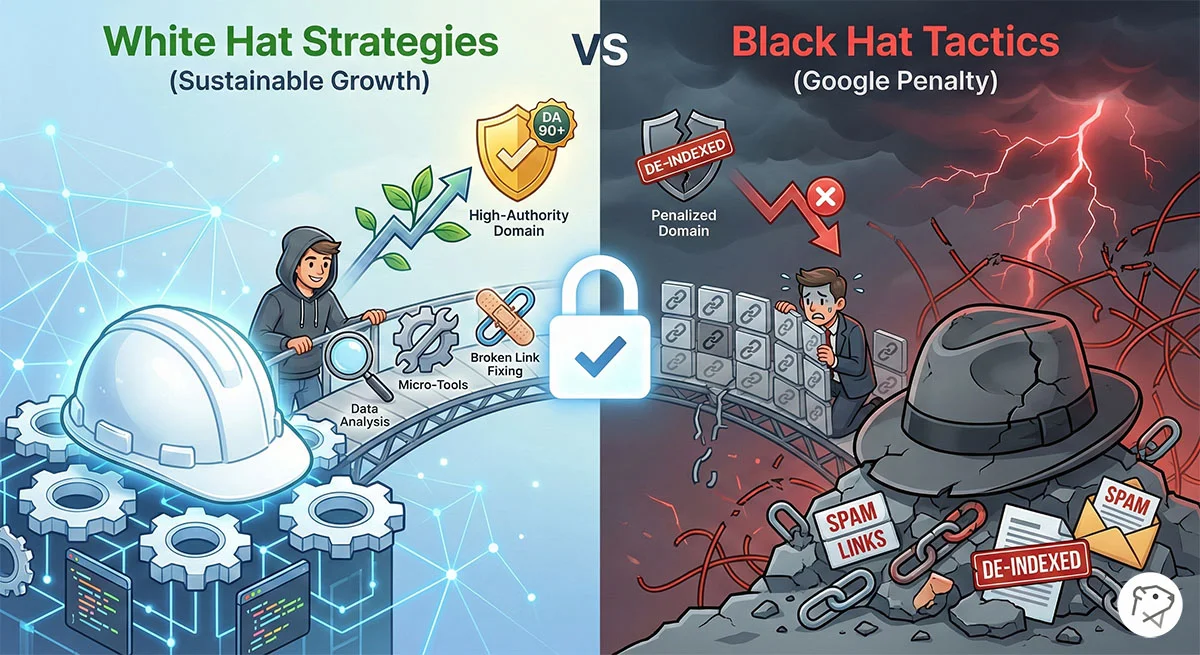
The good news? You don't have to act like a spammy marketer to get them. As developers, we have an unfair advantage. We can engineer our way to high-quality, white-hat backlinks. Here are the strategies that actually work today, built for the technical mind.
1. Build "Link Magnet" Micro-Tools (The Developer’s Cheat Code)
Why spend 40 hours writing a massive 5,000-word blog post that might get a few links, when you can spend 10 hours coding a free, highly useful micro-tool?
People naturally link to utility. If you create a tool that solves a specific problem for your target audience, other websites will reference it as a resource.
How to execute this: Find a common pain point in your niche. Let's say you operate in the e-commerce space. Build a "Free Stripe Fee Calculator" or a "JSON-LD Schema Generator for Products."
-
Host it on a dedicated URL (e.g.,
yourdomain.com/tools/schema-generator). -
Make the UI incredibly clean and fast.
-
Add a simple embed code or API endpoint if applicable.
When industry blogs write articles like "Top 10 Tools for E-Commerce SEO," your calculator will organically attract high Domain Authority (DA) links because it provides tangible, functional value.
2. Technical Broken Link Building (Automating the Hustle)
Broken link building is an old SEO tactic: you find a dead link (a 404 error) on a popular website, email the webmaster, and suggest they replace the dead link with a link to your similar content.
Marketers do this manually, which is agonizingly slow. Developers do this with scripts.
How to execute this: Instead of hunting randomly, use your technical skills to scrape and crawl.
-
Use a tool like Screaming Frog (or write a quick Python script using
BeautifulSoupandRequests) to crawl high-authority resource pages in your industry. -
Filter the crawl data to only show external links returning a
404 Not Foundstatus. -
Check if you already have content that replaces the dead resource. If not, build it.
-
Send a highly targeted, helpful email to the webmaster.
“Hey [Name], I was looking at your resources page and noticed your link to the Webpack configuration guide is throwing a 404. I actually just wrote an updated, 2026-compliant guide on the same topic. Here’s the link if you want to swap it out so your readers don't hit a dead end.”
You are literally doing QA for their website. Webmasters appreciate it, and the conversion rate for this tactic is astronomically higher than cold pitching.
3. Data Scraping & Digital PR
Journalists, bloggers, and industry news sites are desperate for one thing: Original Data. They want statistics to back up their claims. If you are the primary source of that data, you get the backlink.
How to execute this: As a developer, scraping public data and running analytics is second nature.
-
Write a Node.js or Python scraper to pull public data relevant to your niche (e.g., analyzing 10,000 real estate listings, scraping GitHub repositories to find the most popular JS frameworks, etc.).
-
Dump the data into a database, write some SQL queries to find interesting trends, and visualize it using Chart.js or D3.js.
-
Publish a report on your website: "We Analyzed 10,000 React Repositories: Here is What We Found."
-
Pitch the summary to tech journalists and newsletters.
Because you did the heavy lifting of gathering and parsing the data, they will gladly cite you (and link to your root domain) as the source.
4. The "Reverse Image Asset" Reclaim
If you are a full-stack developer who also handles UI/UX, or if you create custom architecture diagrams (like the ones in these articles!), people will steal your images.
They will right-click, save, and upload your beautiful AWS infrastructure diagram to their own blog without giving you credit. Most people get mad about this. Technical SEOs get excited, because an uncredited image is just a backlink waiting to happen.
How to execute this:
-
Create highly valuable, custom graphics, infographics, or architecture diagrams.
-
Every few months, run your custom images through Google Reverse Image Search or tools like TinEye.
-
Find the websites using your images without a link.
-
Send a polite email: "Hey, glad you found my diagram useful for your article! I release these under a Creative Commons license, I just ask that you add a standard attribution link back to the original source here: [Your URL]."
It's a completely white-hat, non-aggressive way to turn your existing assets into high-quality links.
5. High-Quality Open Source Contributions
This is link building specifically tailored for developers. Earning links from high-authority developer hubs like GitHub, WordPress.org, or NPM is incredibly valuable for your domain's trust score.
How to execute this:
-
WordPress Plugins: If you build a lightweight, highly-rated WordPress plugin and host it on the official repository, you get a powerful link back to your author URI.
-
NPM Packages: Publish useful utility functions or React hooks. Your
README.mdfile on NPM and GitHub can naturally link back to your portfolio or documentation site. -
Stack Overflow: Don't spam, but if you have a genuinely helpful technical article that solves a complex bug, providing a summary answer on Stack Overflow and linking to your deep-dive article for "further reading" drives highly targeted referral traffic and relevant links.
The Bottom Line: Engineer Your Authority
White hat link building in 2026 isn't about tricking Google's algorithm. It is about actively injecting value into the internet.
Instead of begging for links, engineer things that demand them. Build free tools, scrape and analyze original data, fix the internet's broken links, and contribute to open source. Treat your backlink profile like a system architecture—build it on a foundation of genuine utility, and the authority will follow.
