
Technical SEO for Modern Web Apps
Look, I get it. We all love the seamless, app-like experience of Single Page Applications (SPAs). As developers, building with React, Vue, or Angular is a joy. You get lightning-fast state management, component-based architecture, and transitions so smooth they make traditional multi-page websites feel like they're from 2010.
But here is the hard truth I’ve learned bridging the gap between development and SEO over the last 20 years: If you build a standard, out-of-the-box SPA, you are actively sabotaging your search engine rankings.
Marketing teams want traffic, and developers want modern architecture. Usually, these two goals clash right at the DOM layer. Let’s break down exactly why SPAs struggle with Google, and the architectural decisions you need to make to ensure your modern web app actually ranks.
Why Googlebot Hates Your Vanilla SPA
To understand the fix, first you need to understand how search engines process the web. Let me explain:
When a crawler like Googlebot hits a traditional server-rendered website (like a standard WordPress or PHP/Laravel site), the server hands it a fully formed HTML document. The bot reads the tags, the content, and the links, and goes on its way.
When Googlebot hits a standard SPA (Client-Side Rendering or CSR), the server hands it a nearly empty HTML file that looks something like this:
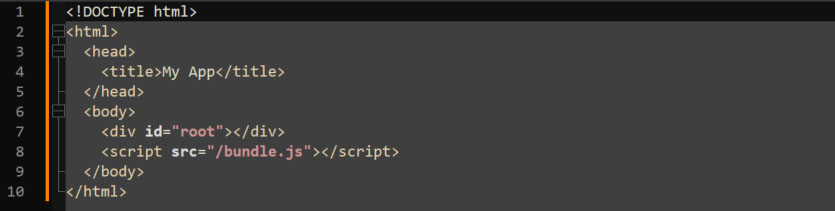
Googlebot sees an empty div. Yes, Google can execute JavaScript using its Web Rendering Service (WRS), but it is a two-wave process. First, it crawls the raw HTML. Then, it throws your page into a queue to be rendered later when computing resources are available.
This delay can take days or weeks. Furthermore, JavaScript rendering is incredibly resource-heavy. If your web app has thousands of pages, you will burn through your "crawl budget" long before Google discovers your most important content.
The Architectural Solutions for SPA SEO
To fix this, we have to change how we deliver the initial payload to the browser (and the bots). You generally have three structural paths to choose from:
1. Server-Side Rendering (SSR)
Instead of forcing the user's browser to build the HTML, a Node.js server executes the React/Vue code on the backend, generates the fully populated HTML, and sends that to the browser. Once the page loads, the JavaScript "hydrates" the page, turning it back into a fully interactive SPA.
- The Tools: Next.js (for React), Nuxt.js (for Vue), Angular Universal.
-
The Verdict: This is the gold standard for dynamic web apps (like e-commerce or large SaaS platforms) that need top-tier SEO. It guarantees bots see your content immediately.
2. Static Site Generation (SSG) / Prerendering
If your content doesn't change every single second, you can generate the HTML files at build time. When a user requests a page, the server just serves a static HTML file, which is blazing fast.
-
The Tools: Gatsby, Next.js (SSG mode), Nuxt.js.
-
The Verdict: Perfect for blogs, documentation, and marketing sites. It offers the best possible performance and Core Web Vitals, but isn't suitable for highly dynamic, user-specific data grids.
3. Dynamic Rendering (The Workaround)
If you already have a massive CSR application in production and cannot afford to rewrite it in Next.js, Dynamic Rendering is your fallback. You configure your server (or use a middleware service like Prerender.io) to detect the user agent. If it’s a human, serve the normal CSR app. If it’s a bot (Googlebot, Bingbot, Twitterbot), route the request to a headless browser, render the JS, and serve flat HTML to the bot.
-
The Verdict: Google officially considers this a temporary workaround, not a long-term strategy. Use it only as a stopgap while you refactor to SSR or SSG.
The SPA Technical SEO Checklist
Even if you implement SSR, there are SPA-specific quirks that will tank your SEO if you aren't paying attention. Here is the technical checklist you need to implement:
1. Use the History API (Real URLs)
Do not use hash routing (example.com/#/about). Search engines generally ignore anything after the hash. You must use the HTML5 History API (pushState) so your URLs look normal (example.com/about). Every unique view in your app must have a unique, clean URL.
2. Dynamic Metadata Injection
In a standard SPA, navigating between pages doesn't trigger a hard reload, which means your <title> and <meta name="description"> tags won't change unless you tell them to.
-
Action: Use libraries like
React HelmetorVue Metato dynamically update the document head as the user navigates. Make sure this metadata is also rendered on the server if using SSR!
3. Use Proper <a> Tags for Internal Links
Developers love to use onClick events on <div> or <button> elements to route users around an app. Don't do this for navigational links. Googlebot does not click buttons; it crawls href attributes. Always use standard <a href="/your-link"> tags for navigation, even if you are intercepting the click with your router.
4. Handle HTTP Status Codes Correctly (The 404 Problem)
In a pure CSR app, the server always returns a 200 OK status, even if the user navigates to a product that doesn't exist. The JS just renders a "Not Found" component. To Google, this is a "Soft 404," which is terrible for indexation.
-
Action: Your server (via SSR) must be configured to actually throw a
404 Not Foundor410 GoneHTTP header when content doesn't exist.
5. Optimize Hydration for Core Web Vitals
SSR gets your content indexed, but "hydration" (the process of JS attaching event listeners to the server-rendered HTML) can block the main thread. This tanks your Interaction to Next Paint (INP) and Total Blocking Time (TBT) scores.
-
Action: Keep your initial JavaScript payloads lean. Look into modern techniques like partial hydration or React Server Components to ship less JavaScript to the client.
Summary: Stop Treating SEO as an Afterthought
As web developers, we can no longer treat SEO as "marketing's problem." The architecture we choose on day one dictates whether a business succeeds or fails in organic search.
By utilizing SSR/SSG, maintaining clean URLs, injecting dynamic metadata, and using semantic HTML for routing, you can build web apps that are both technically beautiful and fiercely competitive on Google.
